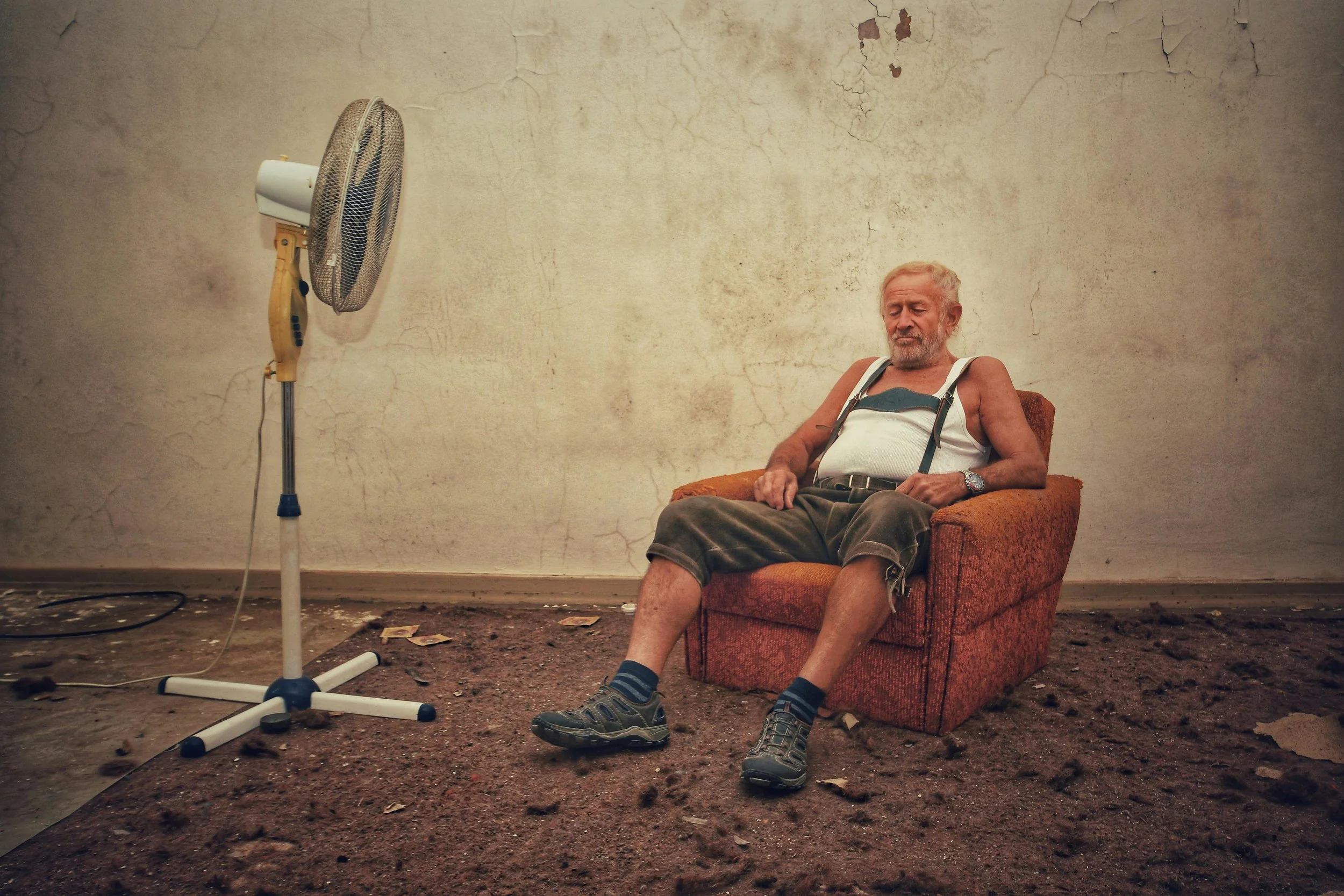
Protecting Our Most Vulnerable from Future Extreme Heat Incidents
The Problem
Many vulnerable people die in heat waves. We still do not know how many died in the disastrous heat dome incident in 2021 – estimates range from 1,000-1,500 in the Northwest/British Columbia area. Many of these deaths can be prevented.
Each new disaster across the country reminds us how fragile elderly and other vulnerable Americans continue to be neglected: Independent senior living centers in Louisiana abandoned by owners as Hurricane Ida’s (2021) power outages left people stranded and alone and nursing homes operated without generators and evacuation plans.
In the Seattle area, nursing homes and assisted living facilities without air conditioning were reduced to handing out ice scarves to patients and staff and begging for fans and air conditioners (https://westseattleblog.com/2021/06/can-you-help-providence-mount-st-vincent-needs-air-conditioners-fans/). Even Amazon resorted to ice scarves for its employees. New reports indicate how heat can affect people with diabetes.
This is simply unacceptable.
To avoid more deaths from extreme heat in the future, there really is only one solution: cooling air.
But first, we need to answer some basic questions:
1. What are the requirements for temperature control in state housing or institutional care? Apparently, the Centers for Medicare & Medicaid (CMS) requires facilities certified after October 1, 1990 to maintain a temperature range of 71 - 81°, but allows for brief excesses. What the Pacific Northwest experienced during the heat dome was not brief and was beyond excessive and it will only get worse. Medical devices and computers that regulate patients’ treatment can also be affected by extreme heat. What are the requirements for other people in the State’s care – people with developmental disabilities, Medicaid adult foster homes, children in foster care, prisons, subsidized or low-income housing?
2. What laws, regulations, and policies need to be changed to adapt to extreme heat? There’s no way around it, you just cannot cool a place adequately with fans when it’s 110° outside. For example, perhaps the State should update its licensing requirements to require that residential care facilities provide adequate air cooling for patients and staff. Such regulations may be especially burdensome for adult family homes, which provide essential care to thousands of Washingtonians. (In Washington State, there are some 4,200 adult family homes who serve between two and eight residents.) Perhaps a requirement (federal or state) that these homes add air cooling to each room might be phased in over, say, five years to ease the burden. We should also require that every residential facility has backup power for outages in summer and winter. Perhaps legislative hearings could examine current needs.
3. Who and where are the people most at risk of being affected by extreme heat? Every community (and county) should conduct an assessment and map its at-risk community. Disaster planners who have not already done so must identify populations most at risk within their jurisdiction, so they know who needs critical help in a crisis. Where are the long-term care facilities, adult family homes, dialysis centers, youth shelters, domestic violence shelters, and other group homes? How many clients are home care agencies serving? How many seniors are receiving Meals on Wheels? How many clients are signed up for local Medicaid transportation services? How many people have registered with the local power company as power-dependent (it’s not a HIPAA or privacy issue)? Identifying those most in need is a first step toward prioritizing assistance.
4. What resources are available? Who can assist individuals, small businesses, and nonprofits who serve the most vulnerable to upgrade their air conditioning systems? For example, individual clients may be eligible for LIHEAP assistance. Community action agencies and area agencies on aging can offer assistance. Institutions may be eligible for solar energy credits or assistance. Do we need tax and other incentives for solar? People dependent on power for survival (including something as simple as refrigerated insulin or more complex like ventilators) should be able to count on their provider for continuity of power. Adding more power to the grid through increased air cooling means we must help small group homes and facilities adapt to solar, if only as a backup to short weather outages.
5. How can we help workers assisting the most vulnerable in extreme heat? It’s no safer for an employee to work in a home or facility when it’s 95° inside, any more than it is for the patient. Providing ice scarves isn’t a solution, it’s like a band-aid on a sternotomy. Nurses and aides who serve residential patients are already doing the Lord’s work at low wages – now they are working in literal sweatshops too. Employers and unions can and should negotiate better working conditions for their staff.
6. What emergency management plans have been developed for counties and the State? The City of Seattle updated its Extreme Heat & Smoke Preparedness Plan. Unfortunately, its main response seems to be providing more cooling centers or temporary fans and air conditioners for gathering places. This neglects all the at-home vulnerable who do not have air conditioning and do not have transportation to cooling centers or are otherwise dependent on medical accessories they cannot take to a cooling center. I heard one expert suggest that windows and fans could generally provide enough relief in the Northwest without requiring air cooling. Maybe, assuming you can open your windows and the air will always be fresh and clear. But we know that wildfires from thousands of miles away are creating hazards every year. You can’t open your windows during a smoky heat dome. And, how long until climate change brings us illness-bearing mosquitoes and other pests to which we are not accustomed? Open windows then become open doors to fatal infections.
7. How do we determine cause of death in WA? Which deaths are required to be reported to the State? In nursing homes, apparently only “suspicious” deaths are required to be reported to the state. It would be a lot easier to track mortality patterns if all deaths were reported. Perhaps we might have discovered the COVID-19 outbreak earlier. My guess is that we really have no idea how many people died from the heat dome or subsequent high heat incidents. Until we can obtain accurate facts, we are stumbling in the dark. See, for instance: https://kingcounty.gov/en/legacy/depts/health/news/2022/July/29-heat-data.aspx
Who Should Be Involved in Developing a Solution?
There are so many players who should be involved in defining the problem and determining solutions. These are just some of the programs who should participate – not a comprehensive list:
· WA DOH (and Public Health/Medical Reserve Corps)
· WA EMD
· WA DSHS (especially ALTSA, DDA)
· Washington State Council on Aging
· Washington State Association of Area Agencies on Aging
· Washington State Health Care Authority (Medicaid)
· Washington State Insurance Commissioner’s Office
· Washington State Department of Commerce (housing assistance, energy assistance, community action agencies)
· Northwest Healthcare Response Network
· Seattle City Light, Puget Sound Energy, etc.
· WA Health Care Association
· Home Care Association of Washington
· Adult Family Home Council of Washington
· SEIU (representing nursing home aides, home care aides)
All of these agencies and organizations have a piece of this puzzle. I am not sure under what auspices such a group might be convened, but perhaps a series of hearings would allow legislators to hear the relevant issues. Or a host agency could develop a comprehensive report with recommendations for moving forward.